My final day at SK Architects arrived, and I wasn’t quite sure what to expect. It turned out to be a full-on day of learning and doing.
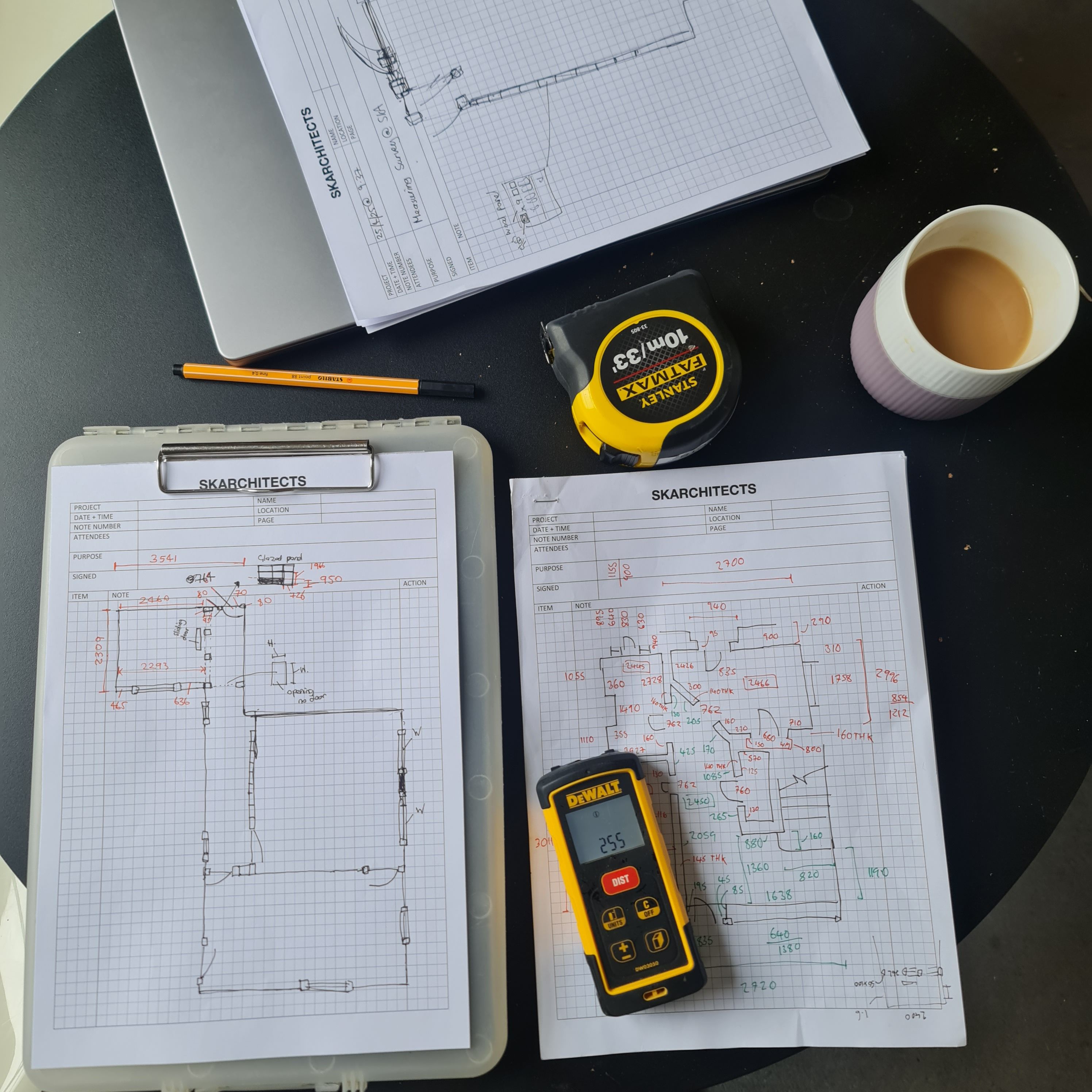
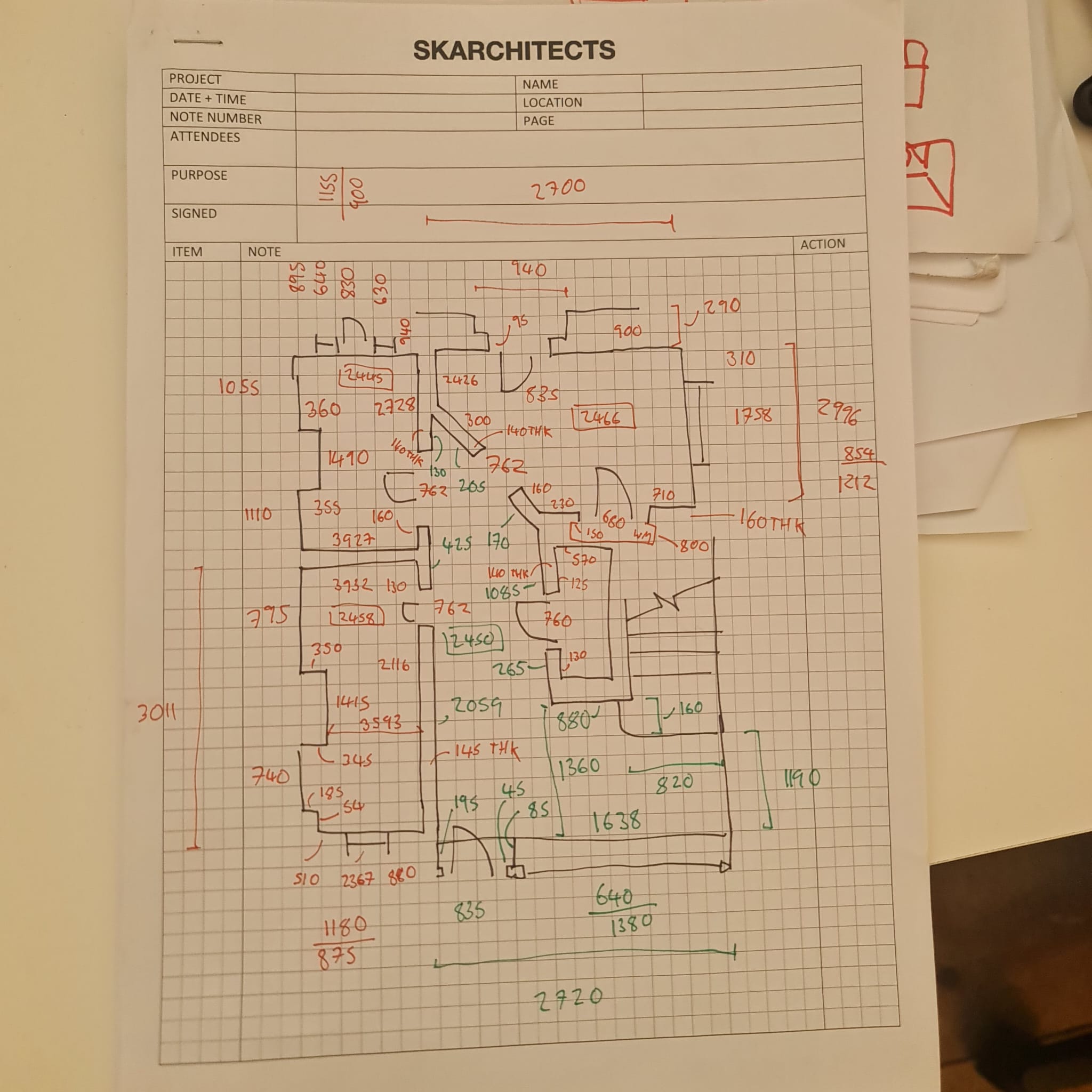
Will set me up with a hand-measured survey of the ground floor of the building. We used a laser measure and a tape measure to record everything manually, starting with where and how to set things out. One of the first lessons was how to focus only on permanent parts of the building — ignoring furniture or anything temporary — and instead concentrating on full wall spaces.
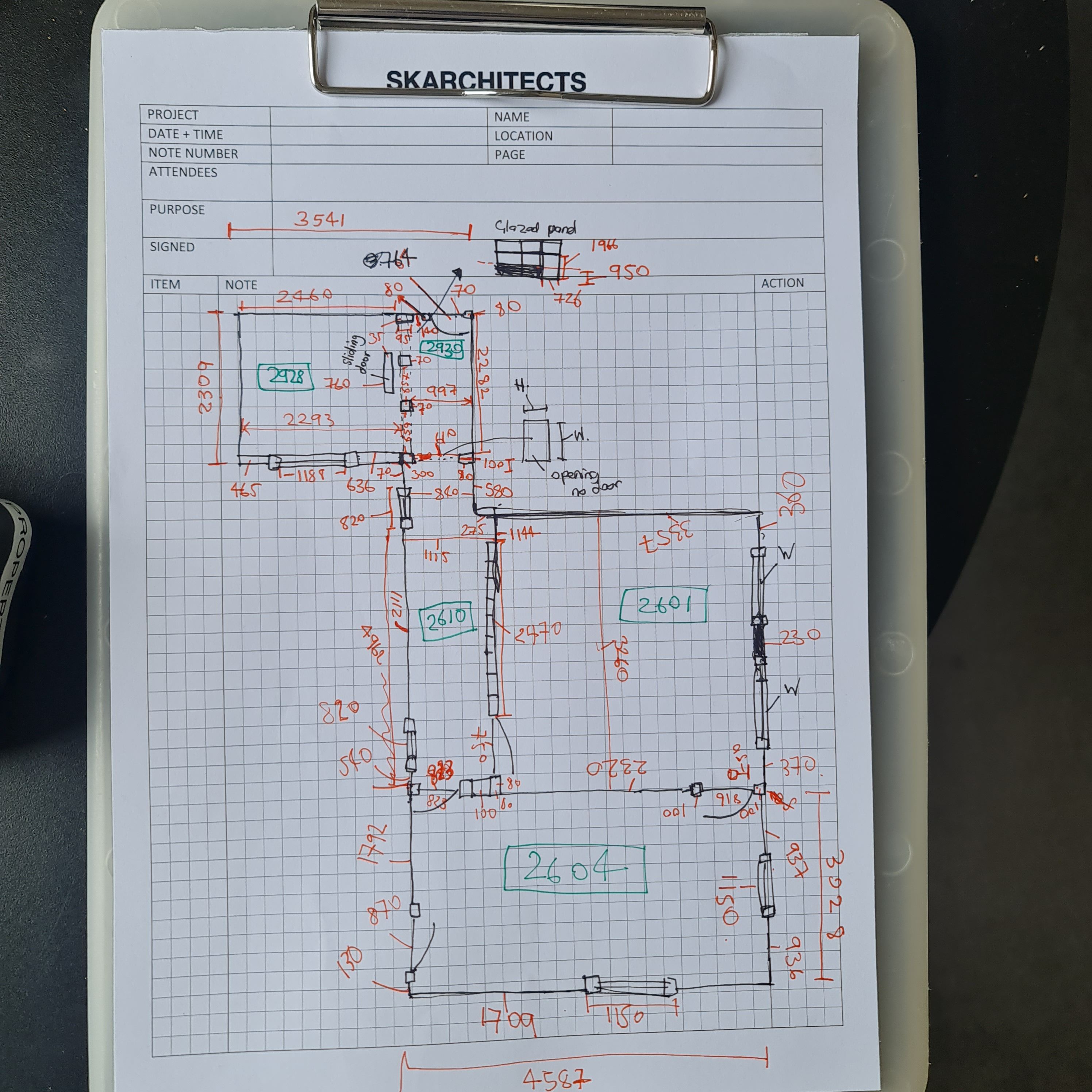
Everything was measured in millimetres. I started from a doorway and worked my way around the space. I could already see that with more experience, you naturally get a better sense of common dimensions. After measuring my first room, the second and third spaces became much easier.
I sketched the rooms as I went, marking measurements on the drawing. Will showed me how to separate the ceiling heights into a box in the middle of the page, while hallway dimensions were marked in green pen and room measurements in red, keeping it clear and organised.
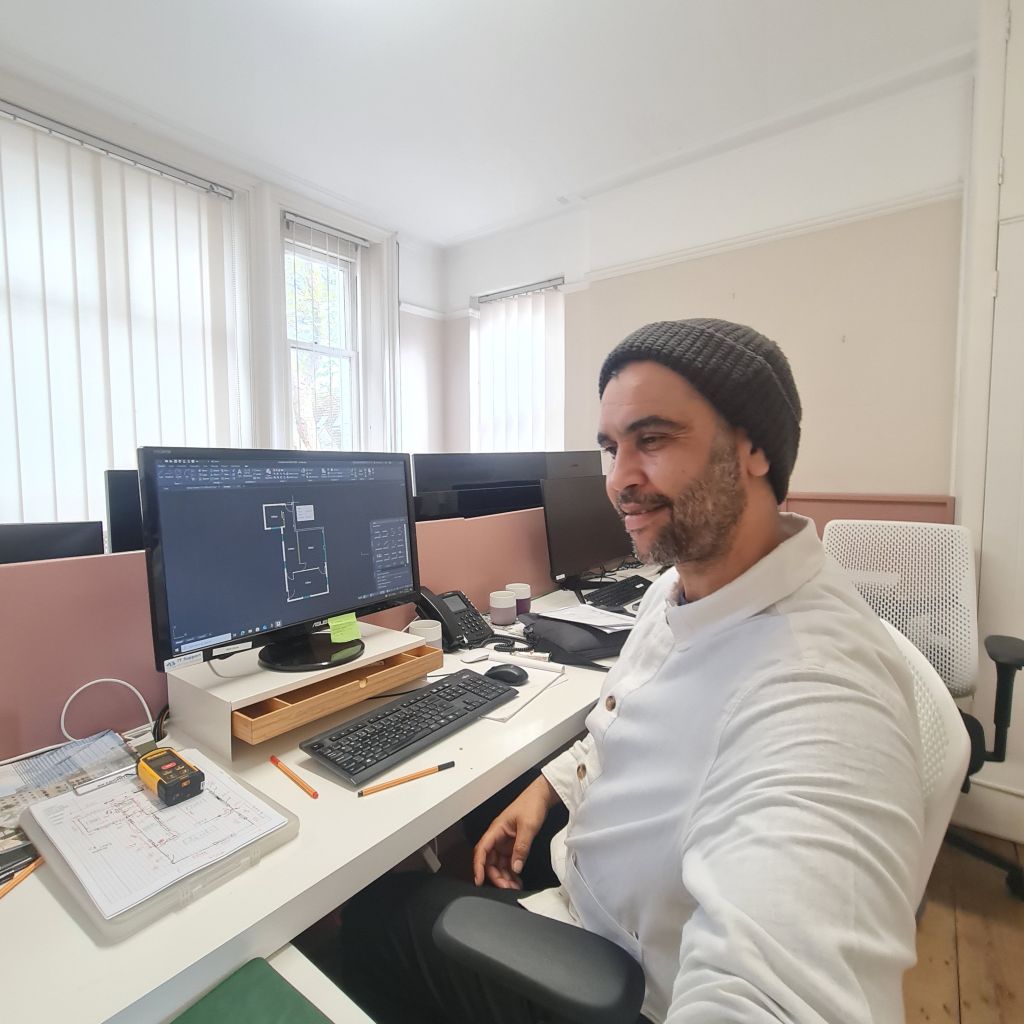
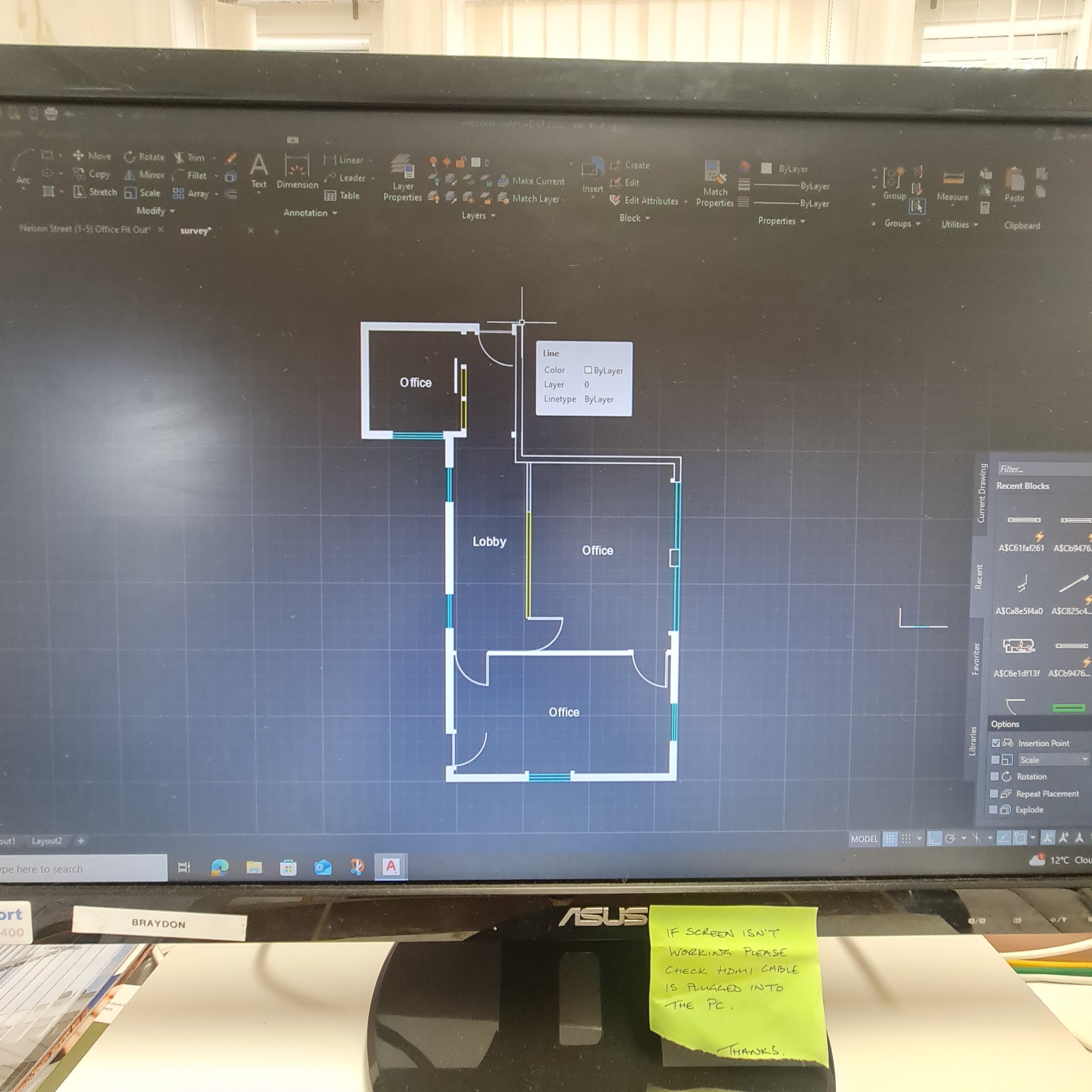
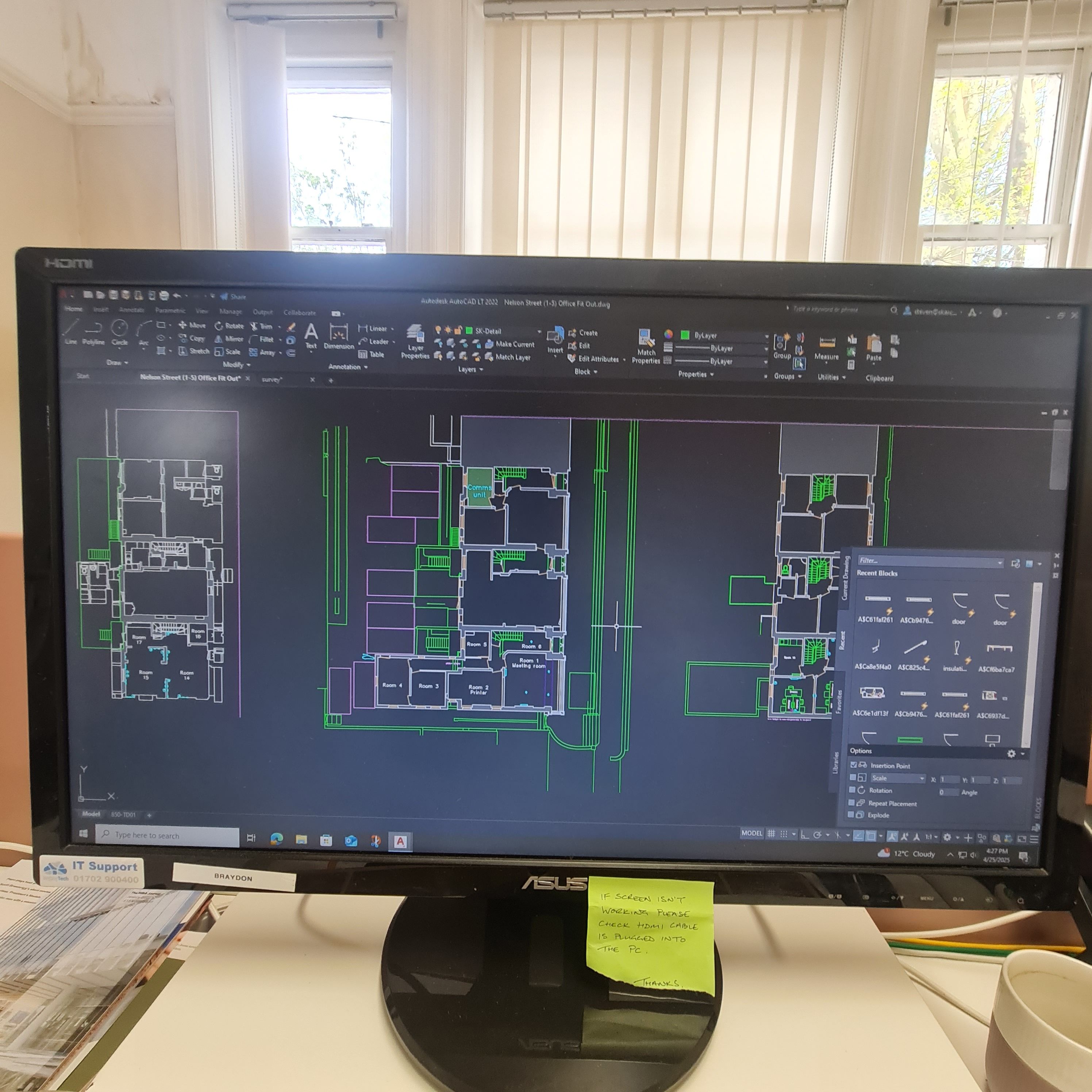
After the measuring stage, I started transferring everything into CAD. Will showed me some shortcuts — how to repeat elements, how to scale walls easily, and generally how to work faster and more efficiently. As I plotted, I realised a few of my measurements were slightly off, but it was easy enough to pop back downstairs, double-check, and adjust. Sometimes it was out by 20–40mm, sometimes a little more, but overall Will said I’d done a really great job, especially for my first time surveying and plotting out an entire space.
Later in the day, I also got some great news from Danielle: one of my desk designs — the one with the banana-shaped curve — had been chosen to be made for the HARP Centre project on the High Street. Knowing that something I designed will actually be built and used is an amazing feeling. I can’t wait to walk in there one day and see it in real life.
Toward the end of the day, I reflected on some of the bigger things I learned during the week. One was the realisation that although architectural studios often do interior layouts, many don’t offer full interior design services because of the extra cost to clients. Visualisation work like SketchUp and rendering is valuable, but it’s time-consuming — and not every client will want to pay for it.
I also learned that CAD is a really powerful tool for quickly and accurately creating working drawings, and that becoming more efficient in CAD will be a huge asset, no matter what area of design I end up working in. It’s a skill I definitely want to keep developing.
Overall, I really enjoyed my placement. It was a great reality check. Working in a real-world studio is much more technical and repetitive compared to university life, where we focus a lot more on creative, conceptual projects without budget constraints. Seeing the day-to-day realities of architectural practice has been eye-opening, and I’m grateful for the experience.
 Michael Joseph