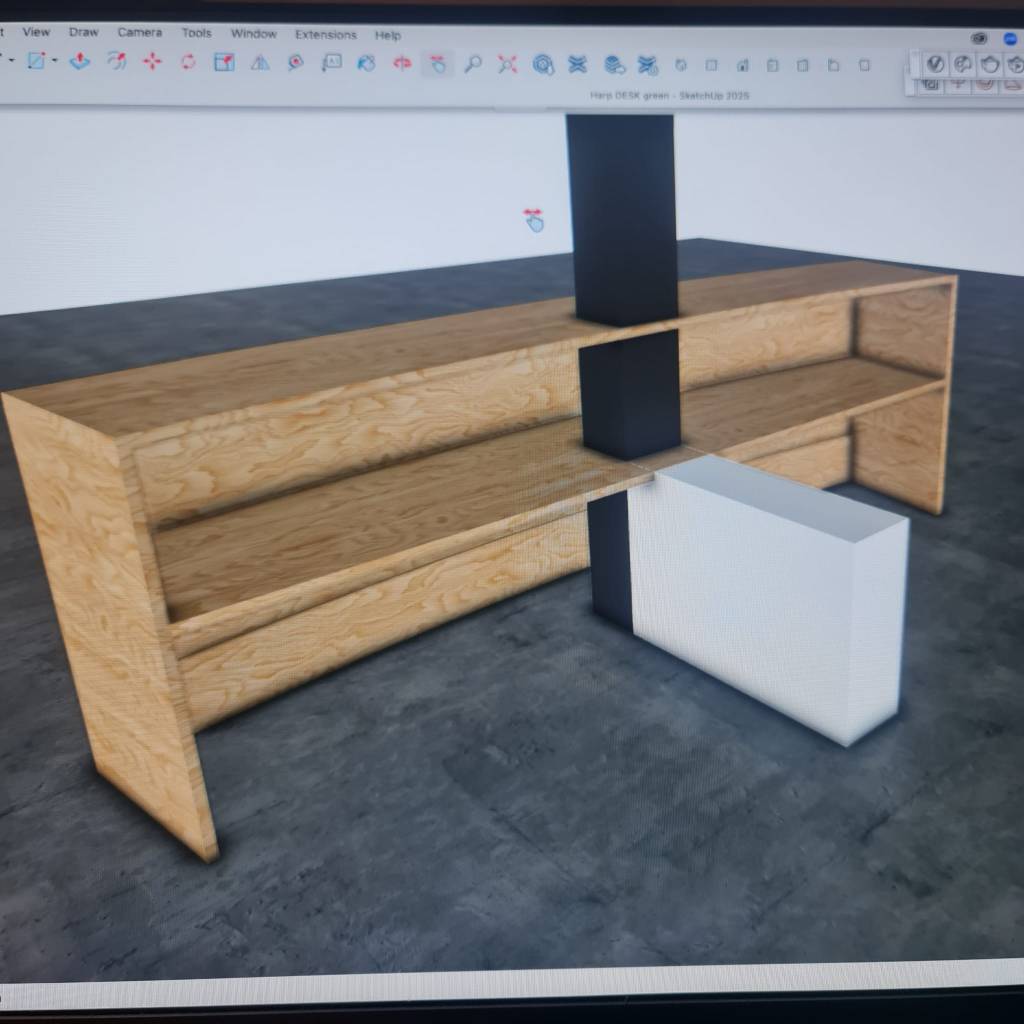
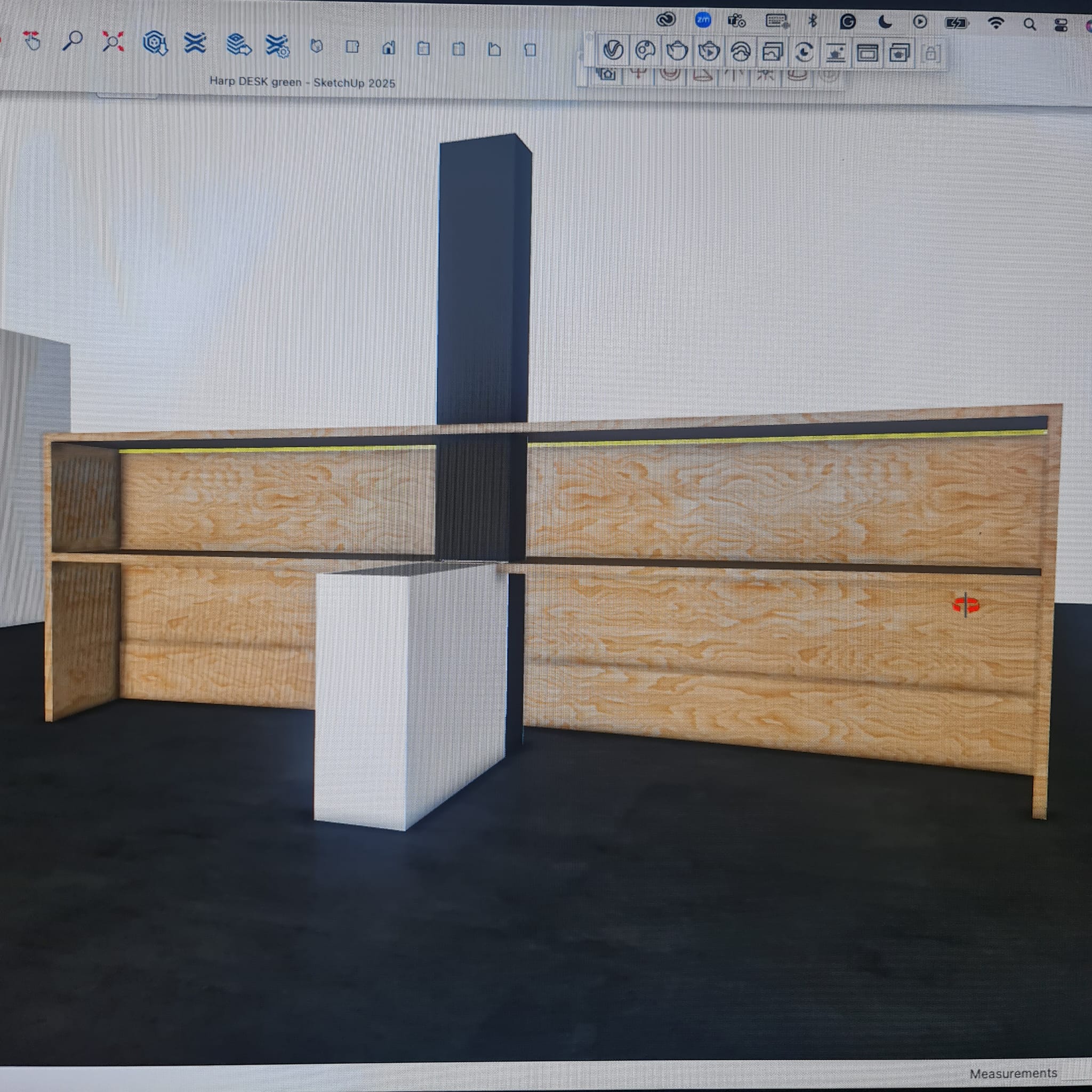
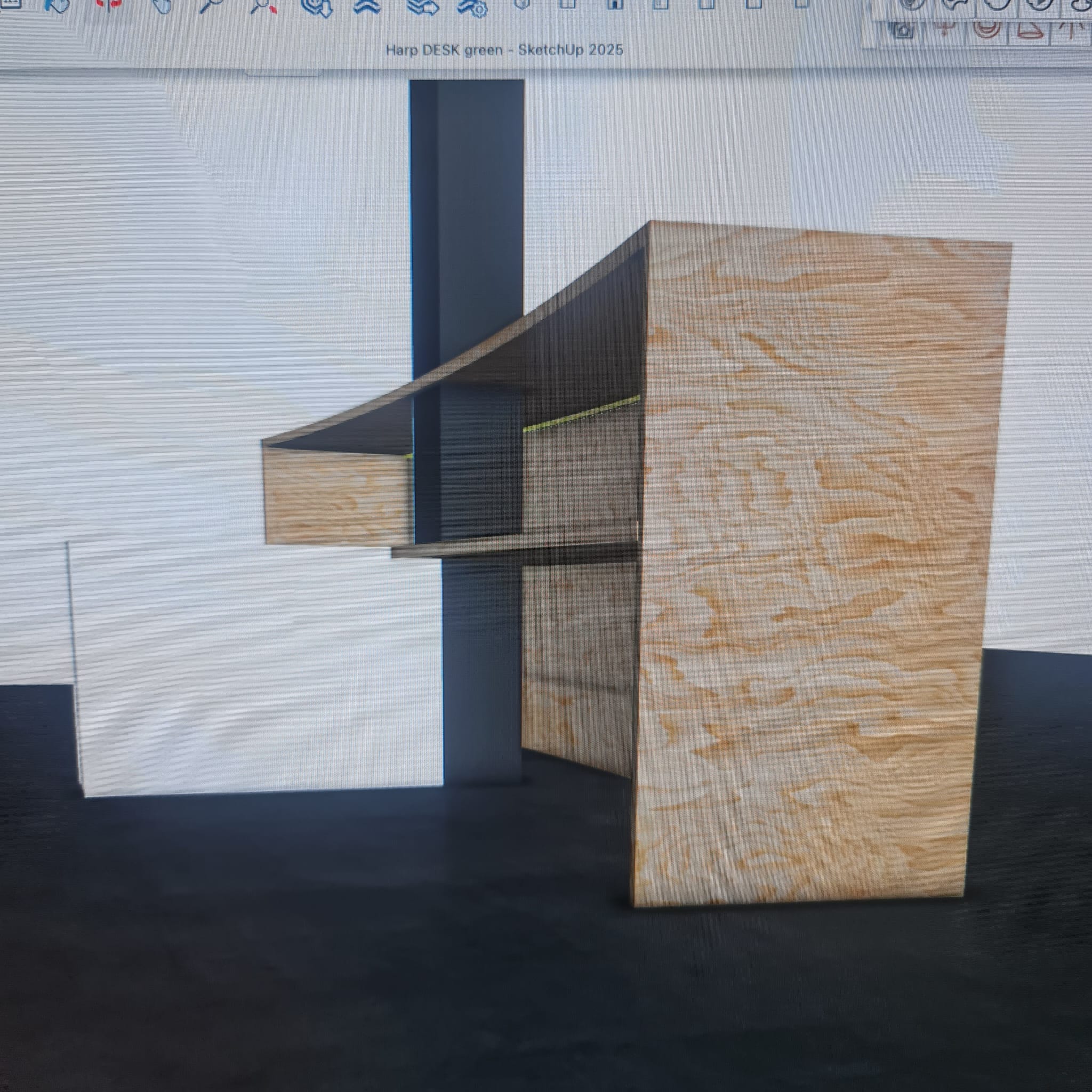
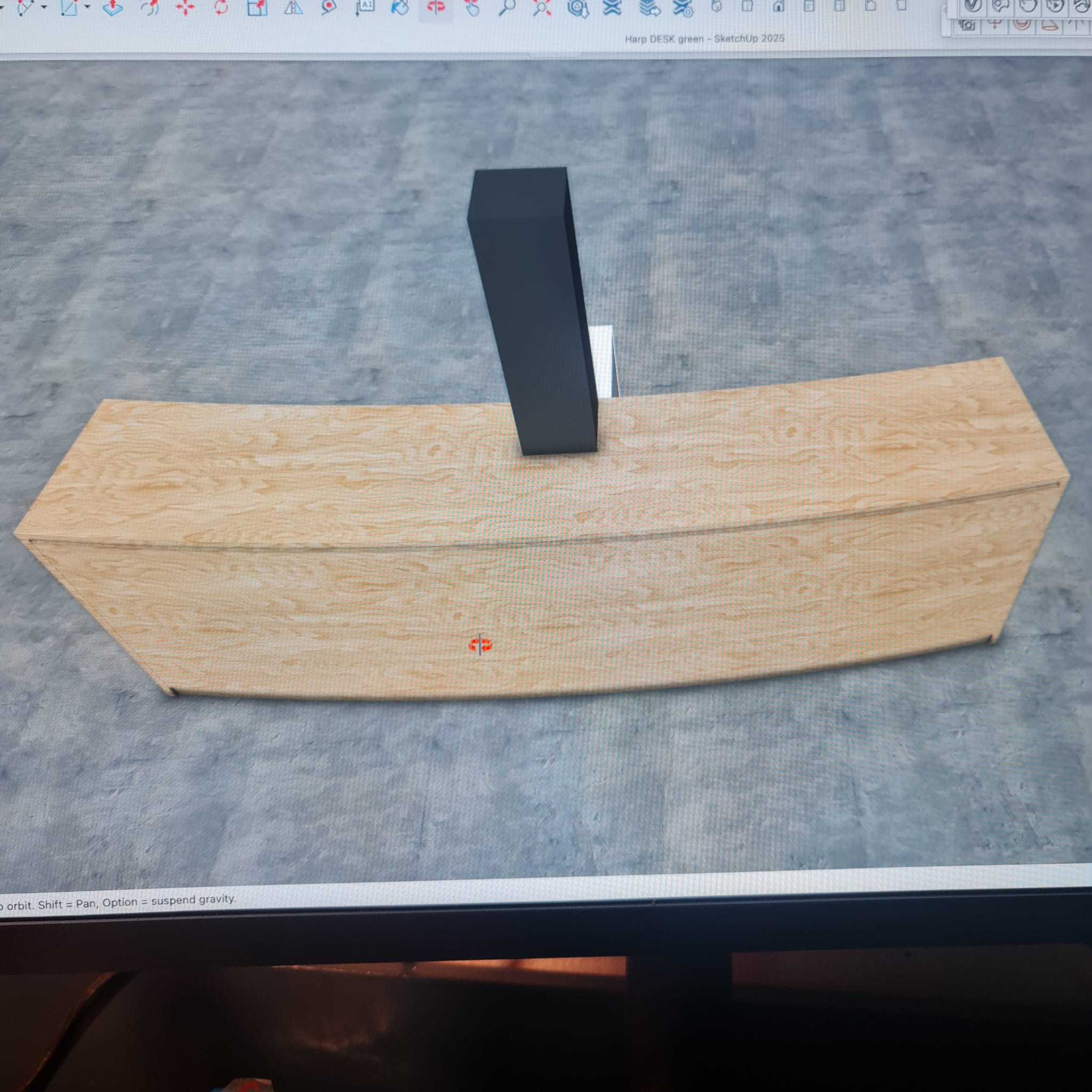
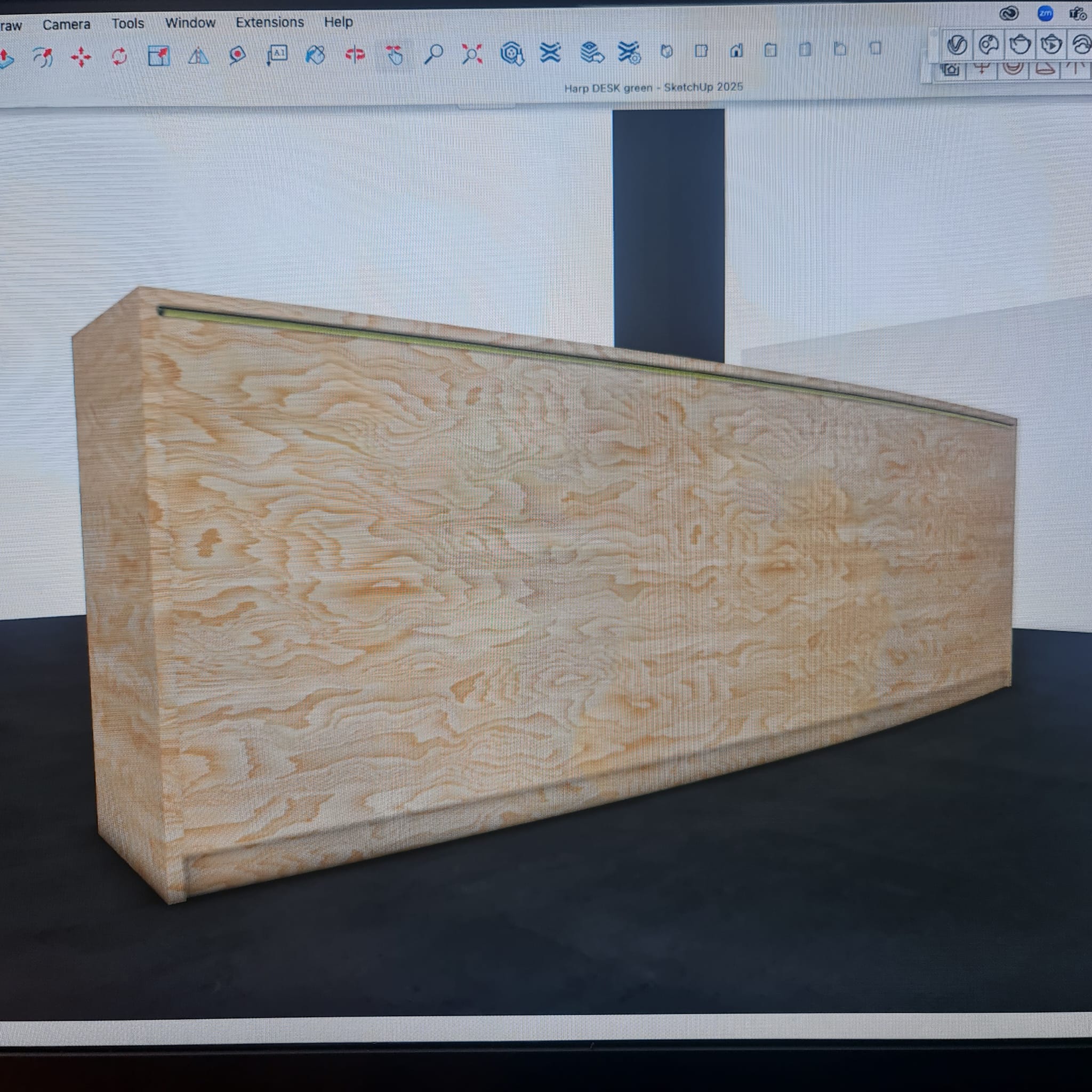
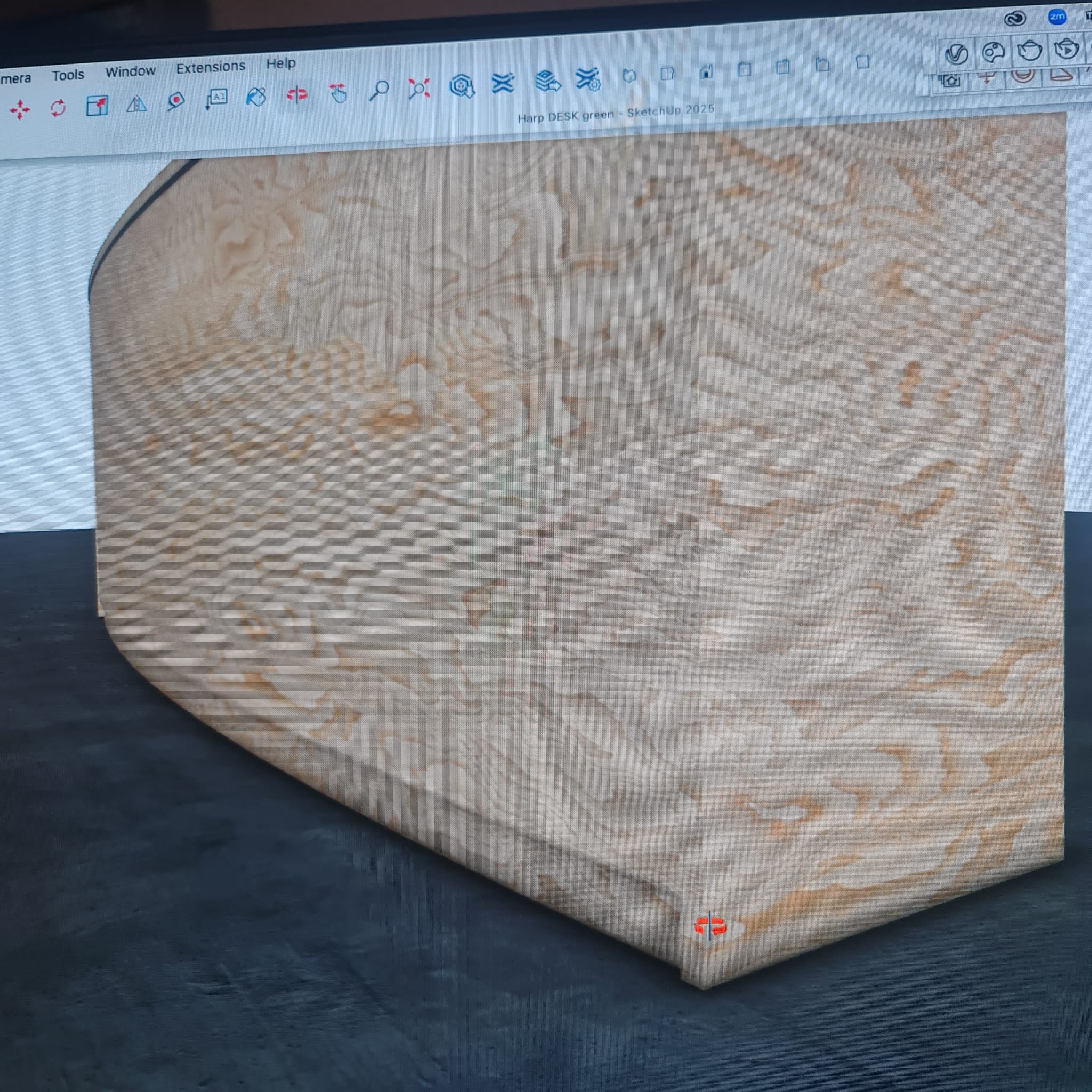
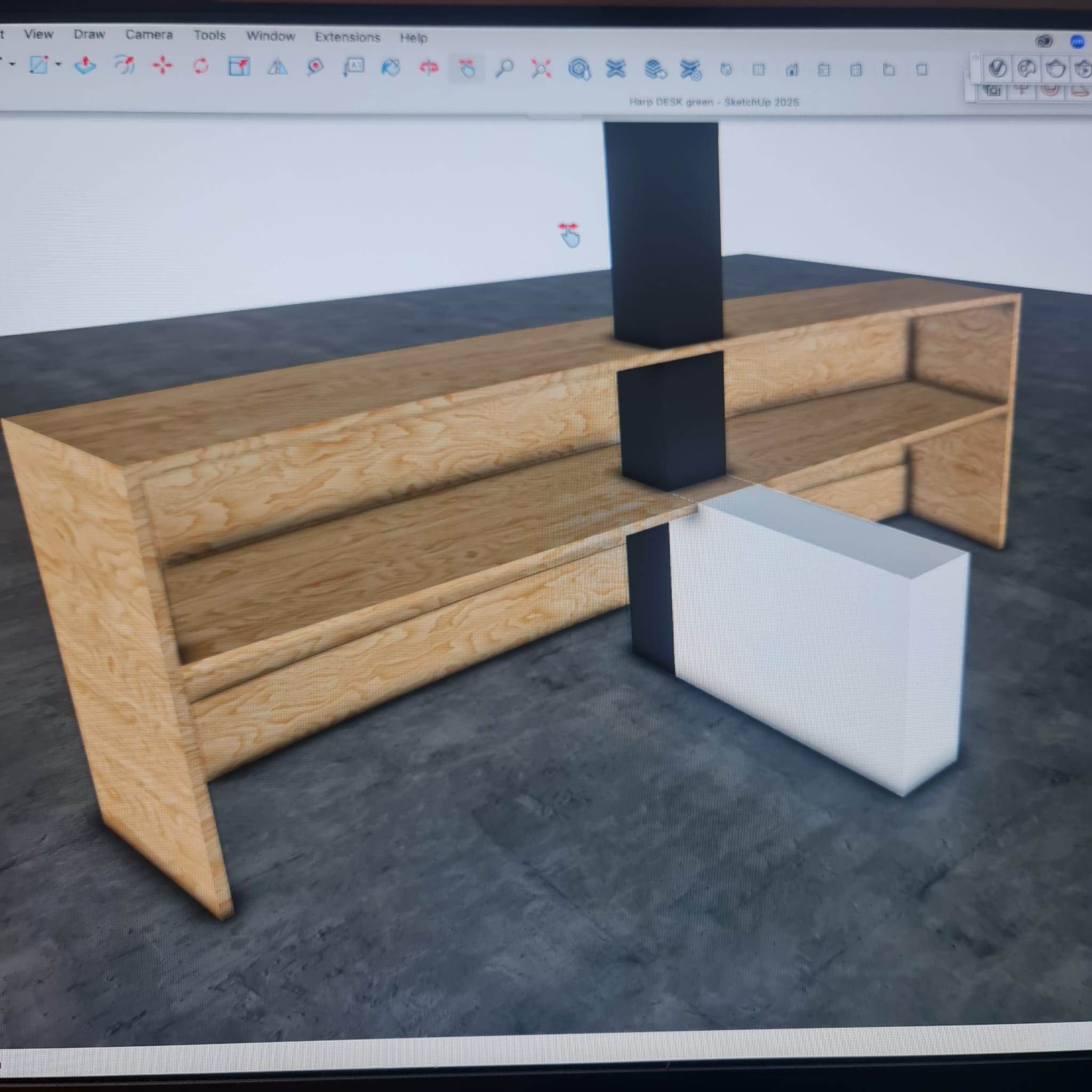
Today was another great day at SK Architects, and one that really pushed my skills in new ways. I continued working on the desk project, which has turned out to be much more complex—and much more rewarding—than I expected.
Back at uni, I’m used to using SketchUp mostly for concept work: experimenting, moving items around, and playing with pre-made components from the SketchUp library. But here, I’m not just arranging objects—I’m building them from the ground up. That shift alone has been a huge learning curve.
This particular desk has quite a few details that added to the challenge. It’s curved, which always complicates things in modelling, and I had to add a small shelf underneath for subtle LED lighting, along with a kickboard at the base—also curved. Just as I was getting that to work, I received an email requesting the sides to be sprayed, which meant re-creating the entire piece from scratch.
It was definitely a moment of frustration, but honestly, I’ve sharpened my skills hugely through this process. In fact, I started from scratch again at home last night, and I managed to get it done. It’s been a challenge, but a satisfying one. And the best part? The desk might actually end up being featured in the High Street Harp Project shop. That would be incredible—so watch this space.
Once I’d finished the first draft, the project expanded. I was then asked to create three alternative designs for the desk, along with a page of colour and stain options, plus a mood board showing inspiration—similar desk styles, types of LED lighting, finishes, and overall visual references. Much of this has been left up to me in terms of layout and creative direction, which has been exciting. It feels great to be trusted with the visual storytelling aspect of a real-world project, not just the technical modelling.
What’s also becoming clearer is the line between architecture and interior design. SK Architects mainly focus on architectural services—things like spatial layout, regulations, construction drawings—rather than styling or mood boards. That’s something I had assumed was integrated into every firm’s offering, but they made it clear that many clients either prefer to make those decisions themselves or opt out of interior design services to save costs.
It’s made me think more deeply about the role of the interior designer. Beyond layout and practicality, a designer brings narrative to a space—how it feels, how it moves someone, how it supports their goals. It’s the difference between simply knowing where to place a sofa and understanding how the space makes someone feel when they walk in. Does it energise them? Calm them? Help them focus?
Of course, not everyone has the budget to invest in a full design process, but I do believe that 3D visualisations and conceptual models can help bridge that gap. They allow clients to see and feel their space before committing, potentially saving money by making more confident decisions early on.
All in all, it’s been a fantastic day. I’ve learned a lot—technically, creatively, and professionally. I’m heading in again today, not sure what’s ahead… but I’m ready to take it head-on.
 Michael Joseph